

Physical Wellness @ Workplace
The Ergonomics Edge!
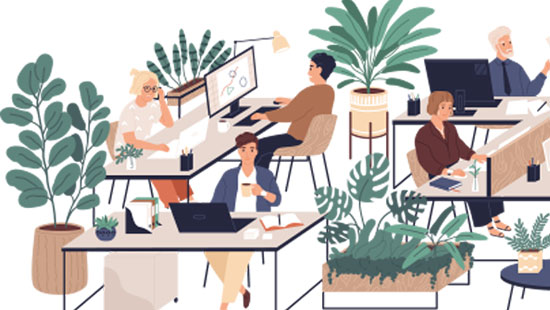 Most of us have sitting jobs, and most of us also know that sitting for long can be bad for you. Ever wondered how bad?
Sitting down all day is as bad as smoking a pack of cigarettes. While they may affect you differently; researchers found that sitting at a desk for 6-8 hours per day is as detrimental to health as smoking a pack of cigarettes a day! Another study found that people who sat down for most of the day were 54% more likely to die of a heart attack! And here’s one you probably haven’t heard before: After just two hours of sitting down, your body’s production of good cholesterol drops by 20%; while the enzymes that breakdown fat drop by 90% – as soon as you sit down! In fact, it’s vital for our well-being that we change not just the way we sit, but the way we work, too. That’s where ergonomics comes in…
Here are some ways to improve the ergonomics at your workplace:
Postures
This is the best place to start. Most office goers today work longer hours, and thanks to connected work spaces, don’t end up moving around, too. Which is where good posture plays a part.
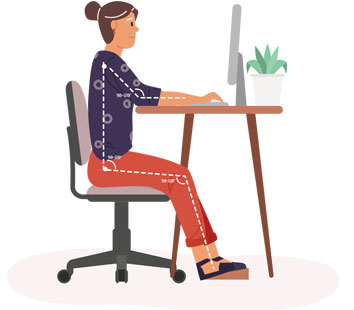
- When standing or sitting, the back should retain its natural “S” curve. Put feet up on a footrest when sitting. Use lumbar support of your chair when sitting to keep from slouching
- Keep wrists aligned with the forearm - the same way they would look if you were holding the steering wheel of your car
- Maintain appropriate neck posture; the head should be facing forward rather than down or up. A good way to achieve this is to keep work at eye level
Be Active
Being static is an absolute no-no; keep moving, keep changing posture. It will have significant health and well-being benefits.
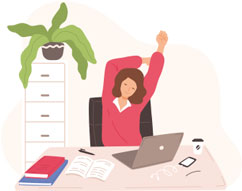
Include exercise and movement into your daily routine. You can even try exercises you can do on your chair itself
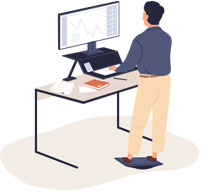
Change to sit-stand workstations if possible. Experts claim this mimics natural movement of human body and reduces back pain and discomfort
Even if you are unable to change the workstation, routinely change your sitting position to reduce excessive loads being placed on the same body parts
Host walking meetings
Workstation Compliance
A poorly-designed workstation can result in strain and discomfort. Small changes can make all the difference; relieving many tension-causing activities and unnecessary exertions.
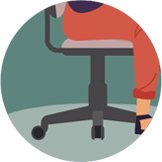 Adjust the height of your chair to ensure your feet touch the ground. If not, use a footrest in conjunction with the chair
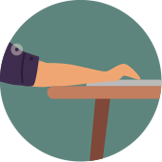 Position keyboard and mouse such that your wrists remain straight. If you need to look at documents frequently as you type, get a document holder. Keep required stationery – pens, pencils, staplers and your phone - within easy reach
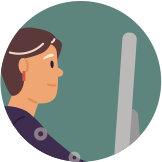 Adjust your monitor to keep it at eye level. If you have a window, place your monitor at a right angle to it to reduce glare. Make sure lights are not too bright or too dim; the former hurts the eye, and insufficient light puts a strain on the eyes and frequently the neck due to leaning to see more clearly